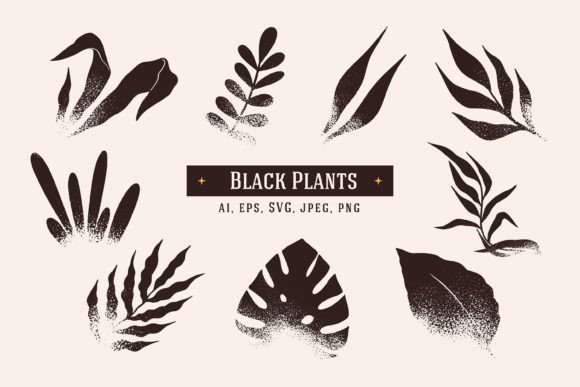
Enhancing Design Projects with Black Silhouette Plants Leaves
Black Silhouette Plants Leaves are an essential resource for anyone looking to elevate the visual appeal of their design projects. This textured silhouette set offers a collection of stylized plant and leaf graphics that can be easily customized and integrated into various creative works. Whether you're a graphic designer, marketer, blogger, or hobbyist, these elements provide a versatile solution for adding depth and sophistication to your visuals.
What Is Included in the Black Silhouette Plants Leaves Set?
The package typically includes:
- 9 Graphic Plants in AI, EPS, SVG formats — allowing full scalability without quality loss.
- Separate files for each element, making it easier to edit individual components.
- PNG images at 300dpi on transparent backgrounds — ideal for overlays and digital content creation.
- JPEG high-resolution versions — suitable for print materials and online publications where file size matters.
This comprehensive format ensures that users have the flexibility to work across different platforms and mediums, from digital illustrations to printed posters.
Why People Choose Black Silhouette Plants Leaves
Designers often turn to Black Silhouette Plants Leaves because they offer a clean, elegant aesthetic that works well in both modern and classic settings. The black silhouettes provide contrast and focus, which is especially useful when working with minimalist layouts or branding that requires subtle yet impactful imagery.
Moreover, the ability to modify colors, sizes, and shapes makes this set adaptable to a wide range of themes and color palettes. It’s not just about using the elements as-is; the real power lies in how creatively they can be manipulated to suit specific needs.
Common Mistakes When Choosing and Using These Graphics
Despite their usefulness, many people make avoidable mistakes when selecting or applying Black Silhouette Plants Leaves. One common oversight is failing to consider the context in which the silhouettes will be used. For instance, using them in a background-heavy design might cause them to get lost instead of standing out.
Another mistake is downloading low-resolution JPEGs thinking they'll suffice for all purposes. While JPEGs are great for web use, they’re not always suitable for print. Always check if the project requires vector-based scalability before settling on raster image formats.
Overlooking Format Compatibility
A frequent issue occurs when users don’t verify whether their design software supports the included file types. If you're working in Adobe Illustrator or Photoshop, you’ll benefit greatly from the AI and EPS files. However, if your workflow relies on Inkscape or other SVG-friendly tools, having SVG versions ready ensures smooth integration.
Better approach: Before purchasing or downloading, confirm which file types your software uses. This avoids unnecessary conversions and potential quality degradation during editing.
Ignoring the Importance of Layering and Transparency
Some creators apply the PNG files directly over busy backgrounds without considering transparency and layering effects. This can lead to poor visibility or clash with existing design elements.
Better approach: Use the transparent PNGs thoughtfully by placing them over gradients, textures, or solid-colored sections of your layout. Test different opacity levels and layer blending modes to see what enhances the overall look best.
Misusing Vector Files Without Proper Editing Skills
Vectors like AI, EPS, and SVG offer incredible flexibility, but they require some knowledge to manipulate effectively. Beginners may attempt to change colors or scale elements incorrectly, resulting in distorted or unprofessional-looking graphics.
Better approach: If you're new to vector editing, take time to learn the basics of your chosen software. Many free tutorials online can guide you through adjusting paths, recoloring groups, and scaling non-uniformly. Alternatively, use pre-colored variations if available to simplify the process.
How Mistakes Can Affect Your Project
Using the wrong file type or misapplying the silhouettes can significantly impact the final output. For example, a poorly scaled PNG may appear pixelated in a large poster, while incorrect layering can muddy the clarity of a logo or website banner.
In marketing and branding contexts, these errors could reduce the effectiveness of your message. A leaf graphic that’s too small or improperly placed might not convey the intended eco-friendly or organic theme, leading to confusion among viewers.
Impact on Time and Cost Efficiency
Not understanding the file formats can also slow down your workflow. Converting between formats after purchase takes extra time and effort, which is better spent on refining your designs. Similarly, buying multiple sets to cover different resolutions or formats unnecessarily increases costs.
Tip: Always review the product description thoroughly before purchasing. Look for details like "300dpi," "transparent background," and "vector compatibility" to ensure the package meets your needs.
Match the Style to the Theme
These silhouettes are most effective when they align with the overall design theme. For example, using them in a wellness blog header with soft pastel tones gives a natural, calming feel. On the other hand, bold reds and blacks in a fashion portfolio might call for more dramatic placement.
Example: A yoga instructor's social media post featuring a black silhouette leaf against a gradient sunset looks professional and cohesive. The leaf adds symbolism without overwhelming the scene.
Combine Elements Creatively
Don’t limit yourself to using just one silhouette per design. Combining multiple leaves or plants can create intricate patterns or highlight focal points. Try arranging them in symmetrical or asymmetrical layouts depending on the desired effect.
Example: A greeting card design that uses three overlapping silhouettes in varying sizes creates a sense of movement and dimensionality. The layered effect draws the eye naturally toward the center of the card.
Optimize File Sizes for Different Uses
While high-resolution JPEGs are excellent for print, they can bloat web pages if used carelessly. For online content such as websites or emails, optimize images by compressing them appropriately without sacrificing clarity.
Tip: Use tools like TinyPNG or Adobe Photoshop’s "Save for Web" feature to reduce file size while maintaining visual quality. This helps improve page load times and user experience.
What to Check Before Making a Decision
To ensure you choose the right Black Silhouette Plants Leaves set for your needs, keep the following in mind:
- Supported File Types: Confirm that the set includes the formats compatible with your design tools.
- Resolution: Make sure the PNGs and JPEGs are at least 300dpi for professional results.
- Transparency: Transparent PNGs are crucial for overlay designs. Avoid sets that don’t offer this option unless it’s not necessary for your project.
- Customization Options: If you plan to recolor or resize the elements frequently, vectors (AI, EPS, SVG) should be your priority.
- Licensing Terms: Review the usage rights to ensure the graphics can be used commercially or for personal projects as needed.
Real-World Applications and Creative Possibilities
Black Silhouette Plants Leaves aren't limited to a single niche. Here are a few practical applications:
- Web Design: Add a touch of nature to buttons, headers, or navigation bars without cluttering the space.
- Print Materials: Incorporate them into brochures, flyers, or packaging for a refined botanical look.
- Social Media Content: Use them as borders or accents in posts related to health, beauty, or sustainability.
- Presentations and Reports: Replace generic icons with meaningful plant silhouettes to emphasize growth, innovation, or environmental awareness.
Pro Tip: Consider creating a mood board before starting your project. This allows you to visualize how the silhouettes will fit into the larger design context and adjust accordingly early on.
Conclusion
Black Silhouette Plants Leaves are more than just decorative assets — they’re tools that help communicate ideas visually. By understanding the included formats, avoiding common pitfalls, and applying thoughtful design strategies, you can unlock their full potential and enhance your creative output.
Whether you're designing for business or personal use, taking the time to learn how best to integrate these elements will save you time, money, and frustration in the long run. With the right approach, these silhouettes become valuable additions to any design toolkit.